The books balance themselves
Bookings, payments, VAT and occupancy in one ledger — plus the dashboard that answers the questions your accountant asks in January.
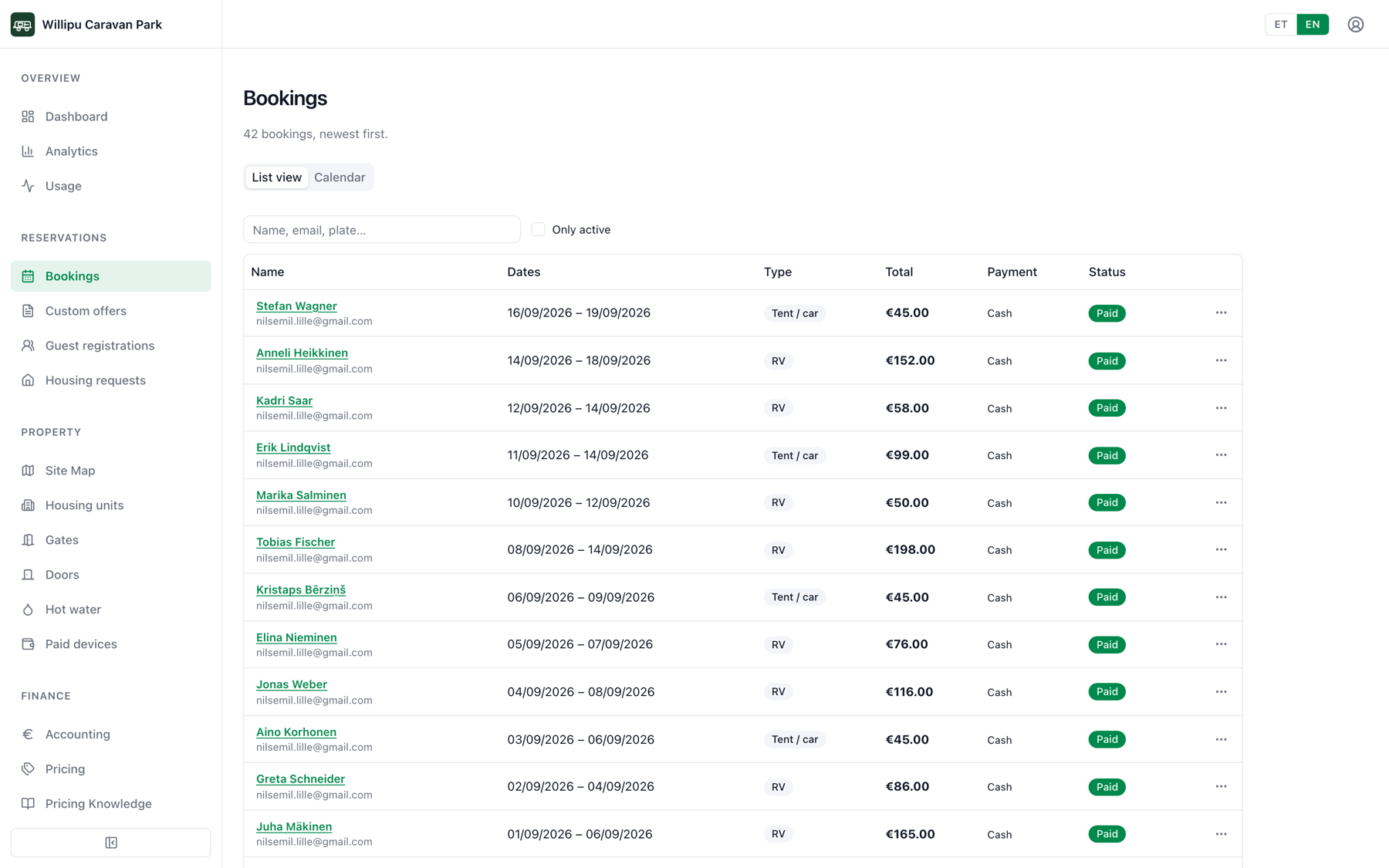
The accounting problem in a small park is not complexity. It is that the numbers live in four places: the bank statement, the booking notebook, the card terminal and somebody’s memory of who paid cash.
When the booking and the payment are the same record, that problem mostly disappears. Each stay carries its own price, its VAT, its payment status and its receipt, from the moment it is made.
What the dashboard shows
- Occupancy by night, so you can see the shape of the season
- Revenue and average nightly rate over any period
- Which bookings are paid, part-paid or outstanding
- Export-ready records for your accountant
Estonian VAT is handled out of the box. Other EU jurisdictions are configurable per tenant, which matters if you run more than one site or bill across a border.
A season you can see is a season you can price.
The reporting has a second use most owners find later: it tells you which weeks were genuinely full and which merely felt busy. That is the difference between raising prices and adding pitches.
Vairāk no bloga
Visi ieraksti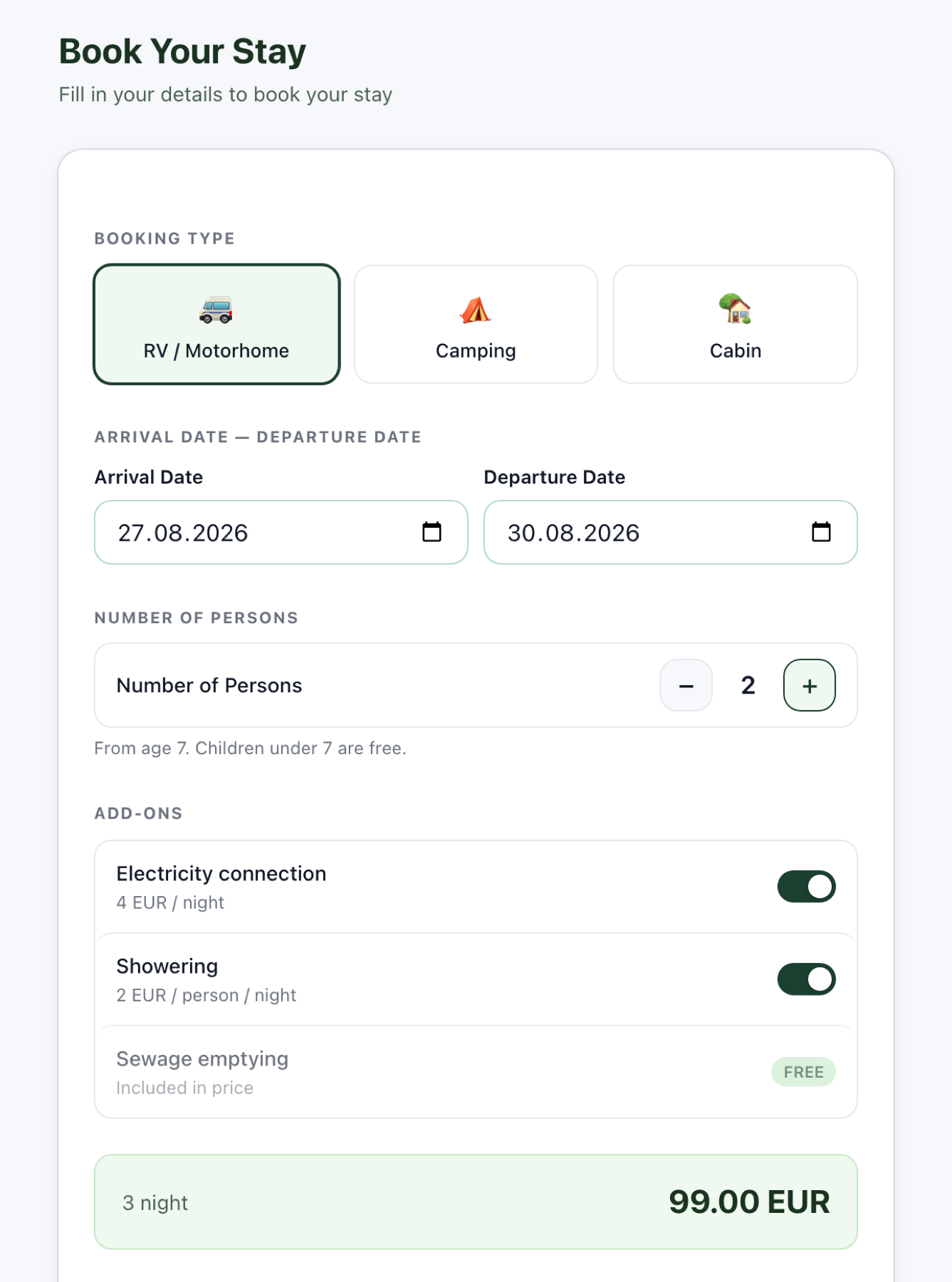
The booking that finishes while you sleep
A guest finds you at 23:40, picks a pitch, pays, and gets a gate link — with nobody at the desk. Here is the whole flow, step by step.
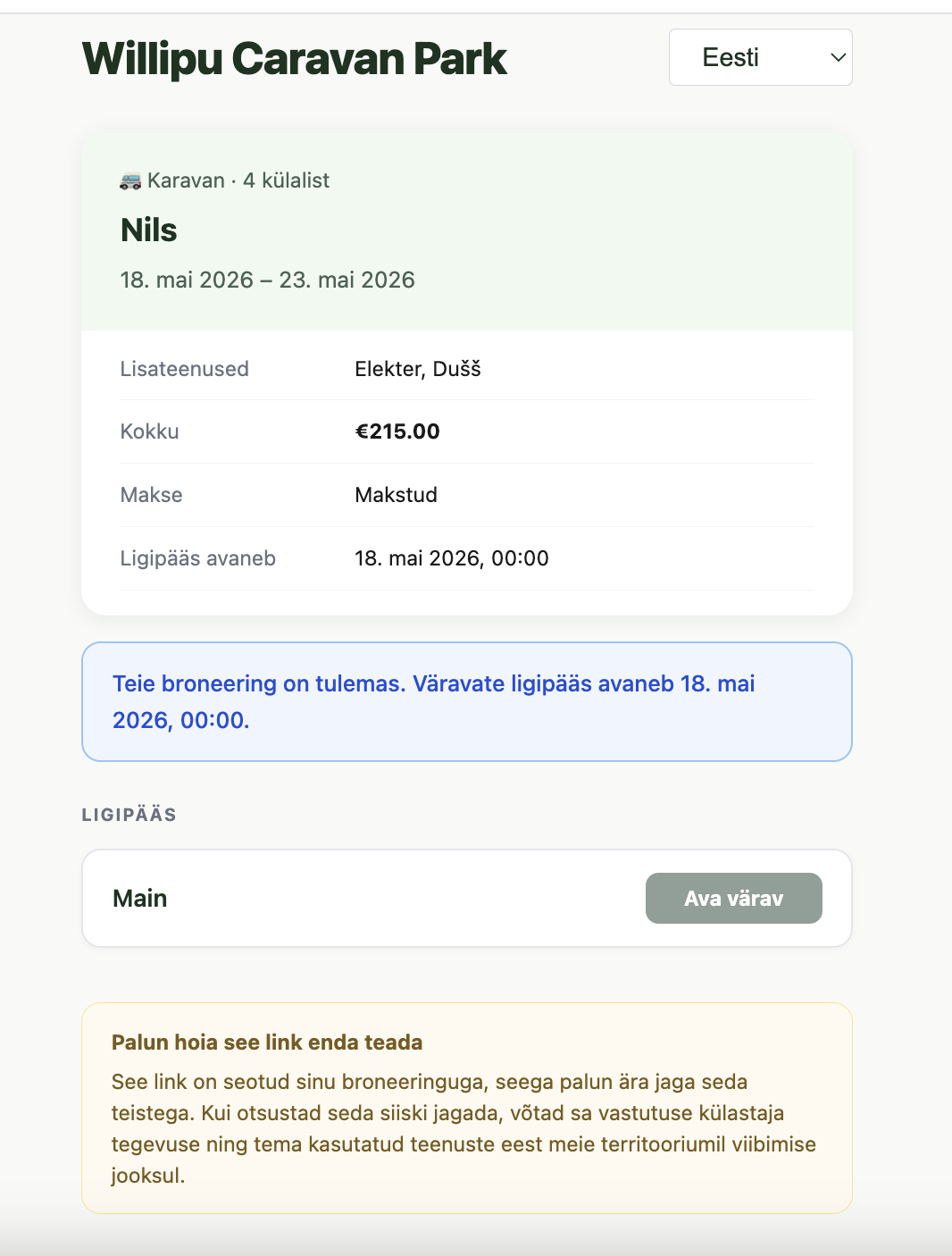
Open the gate without a front desk
Every booking gets its own access link, live only for the nights it paid for. Guests arrive when they like; you read the log in the morning.
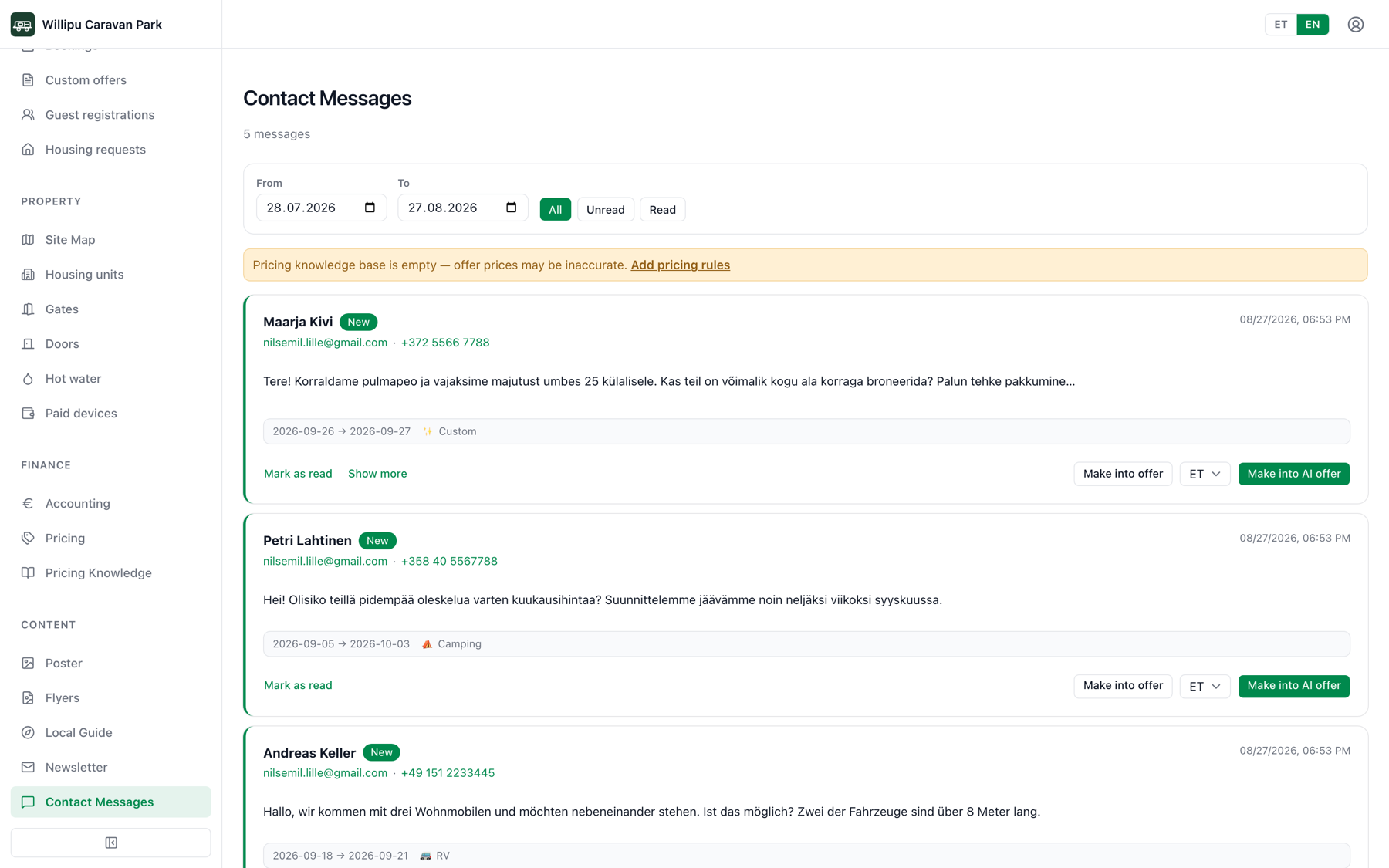
Edit your park’s words in plain language
Your local guide, your terms, your pricing rules — rewritten by asking for the change in a sentence, with a diff you approve before anything goes live.